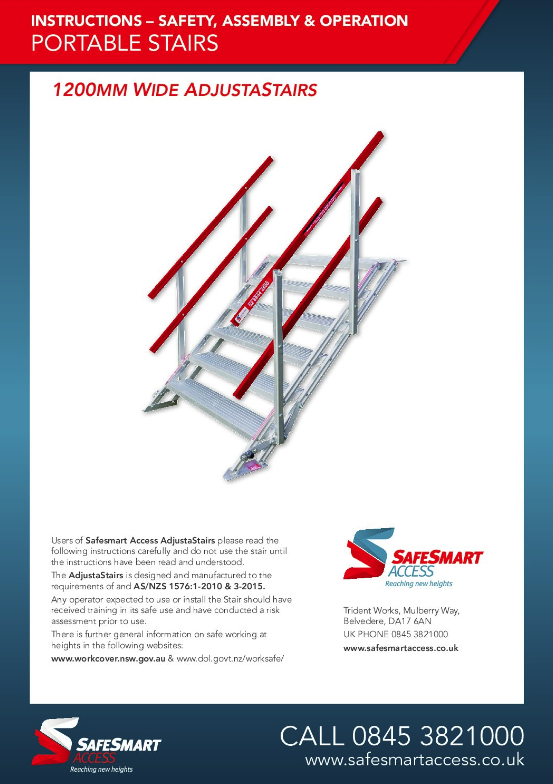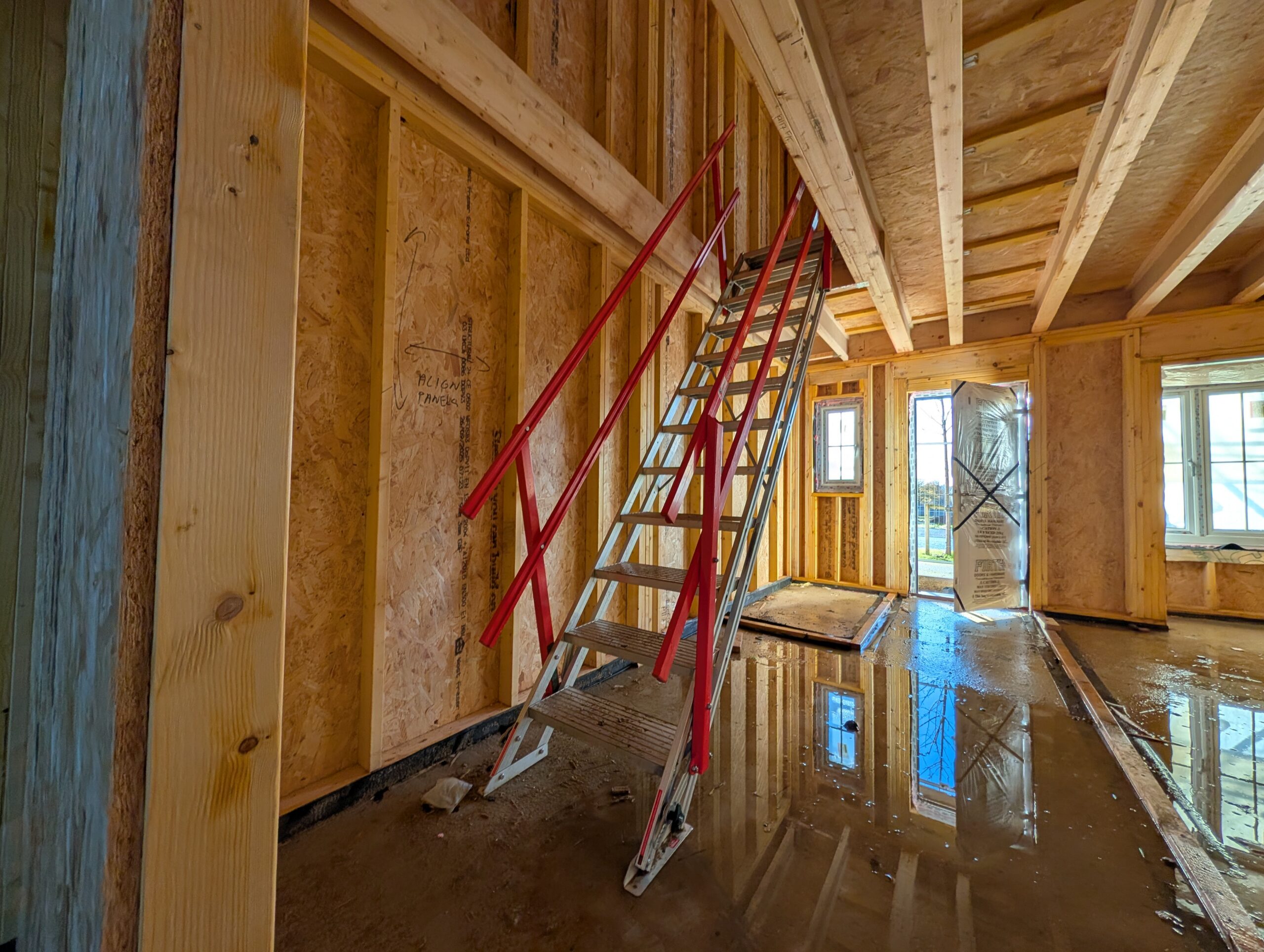
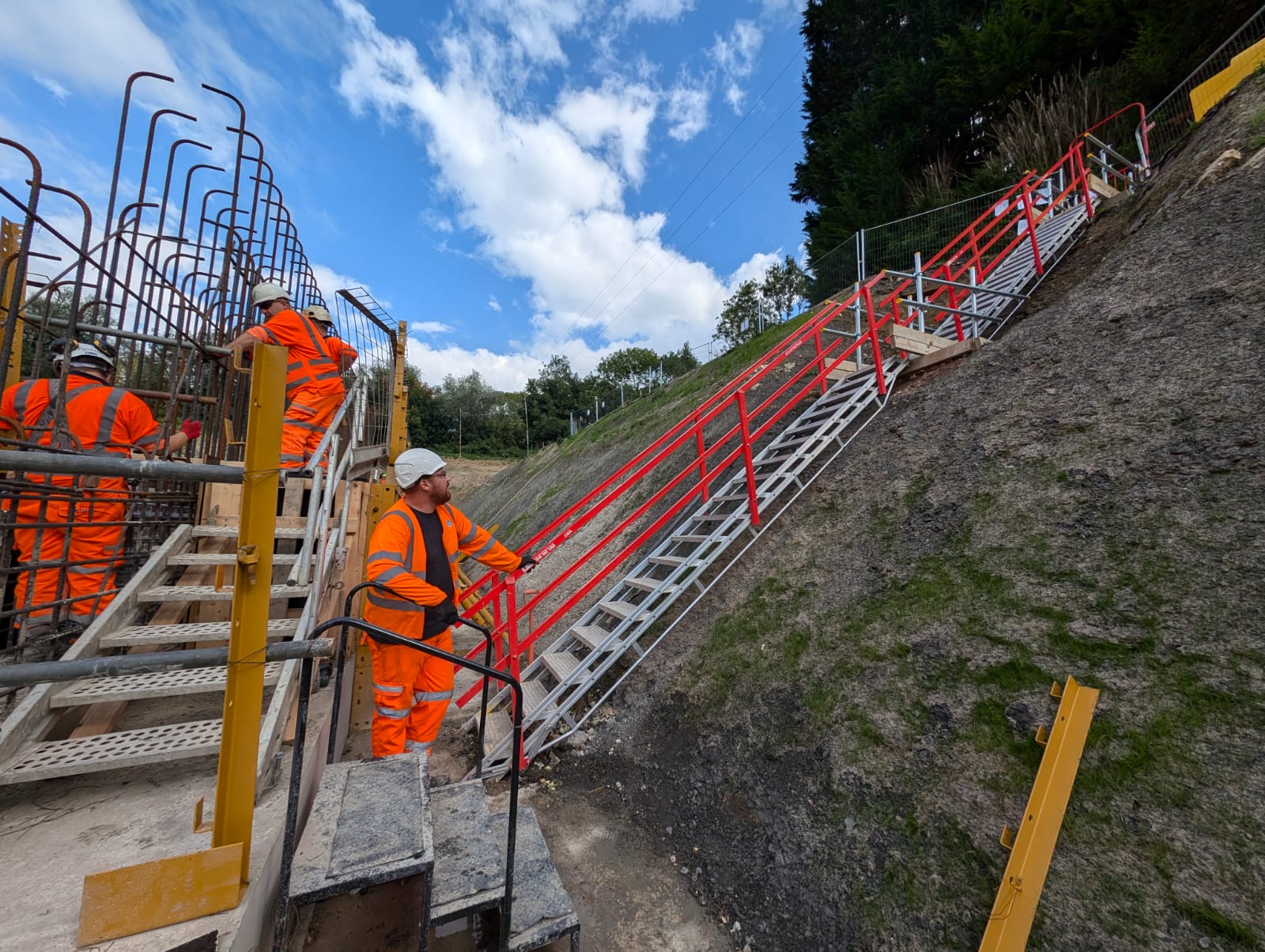
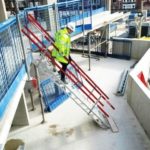
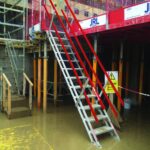
On a deepening excavation or a variable-gradient embankment, the level between two points changes as work progresses, and a fixed timber stair has to be rebuilt every time it does. AdjustaStairs removes that problem: apply the stairs and they adjust to the gradient without prior planning or design, with integral handrails for a fully compliant, fast set-up.
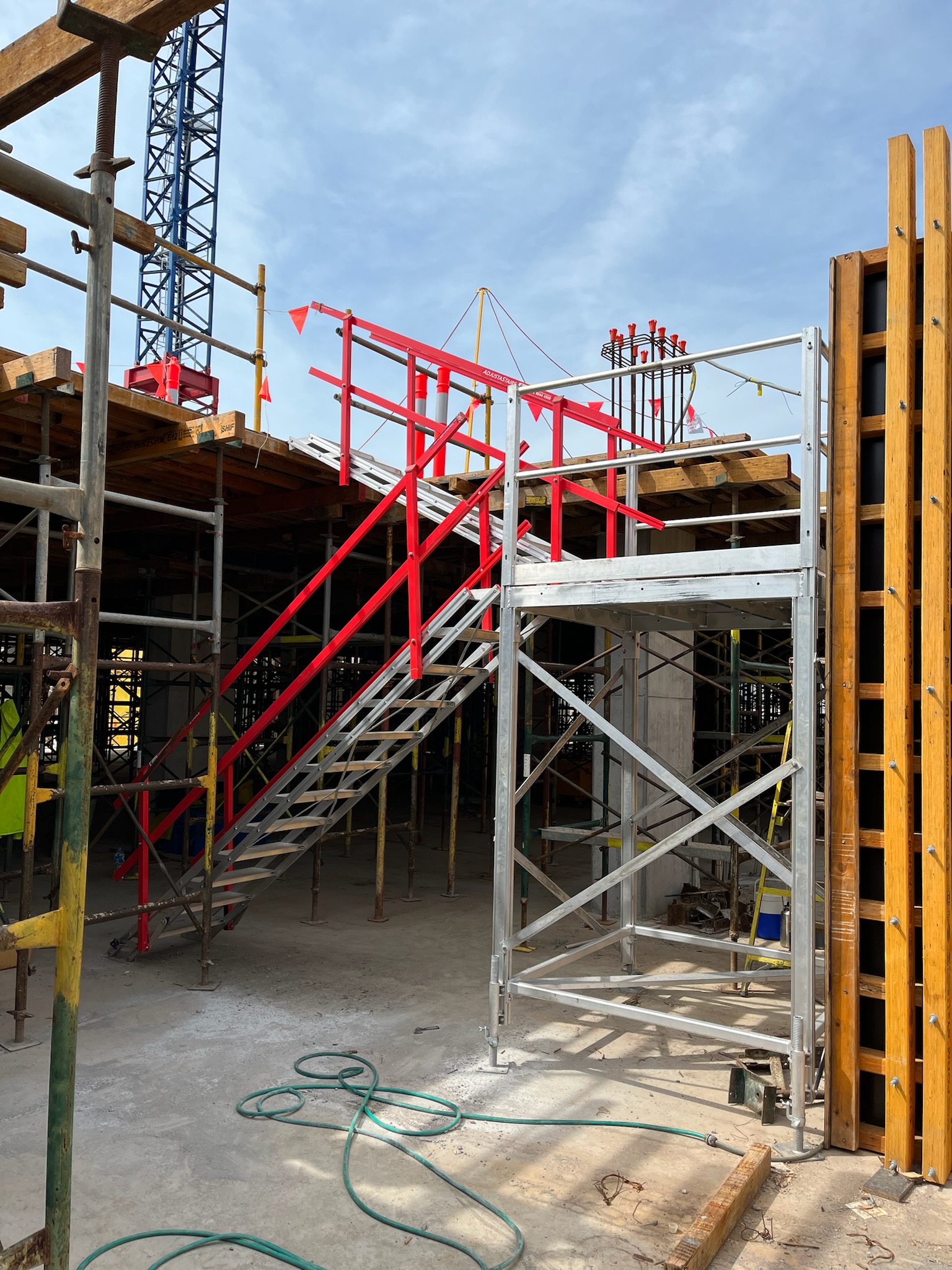
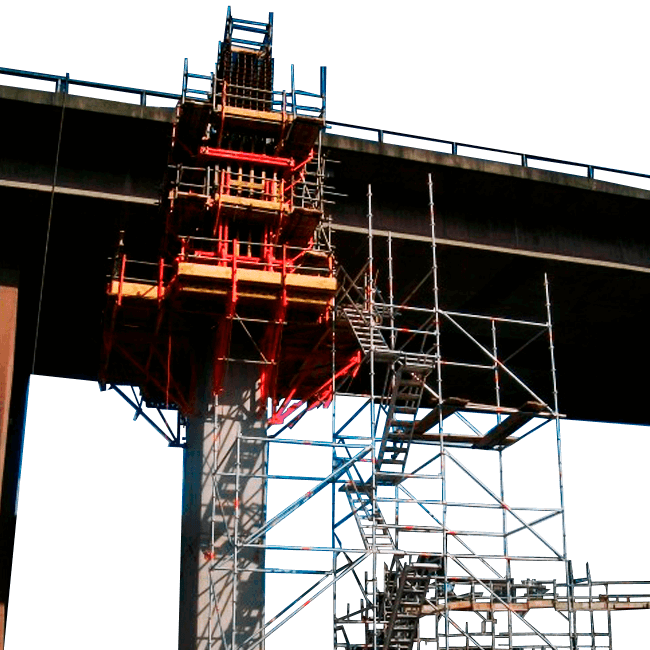
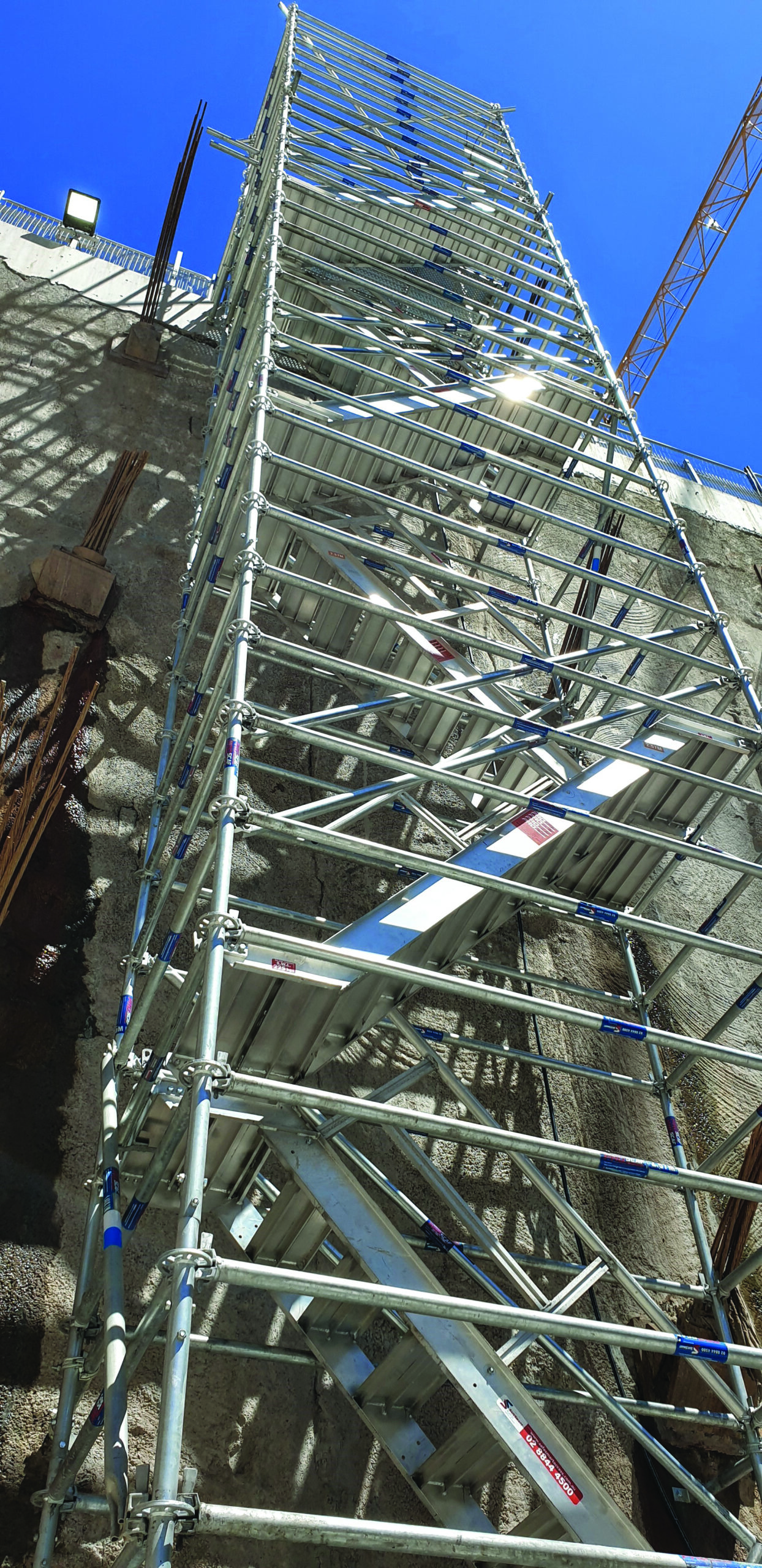
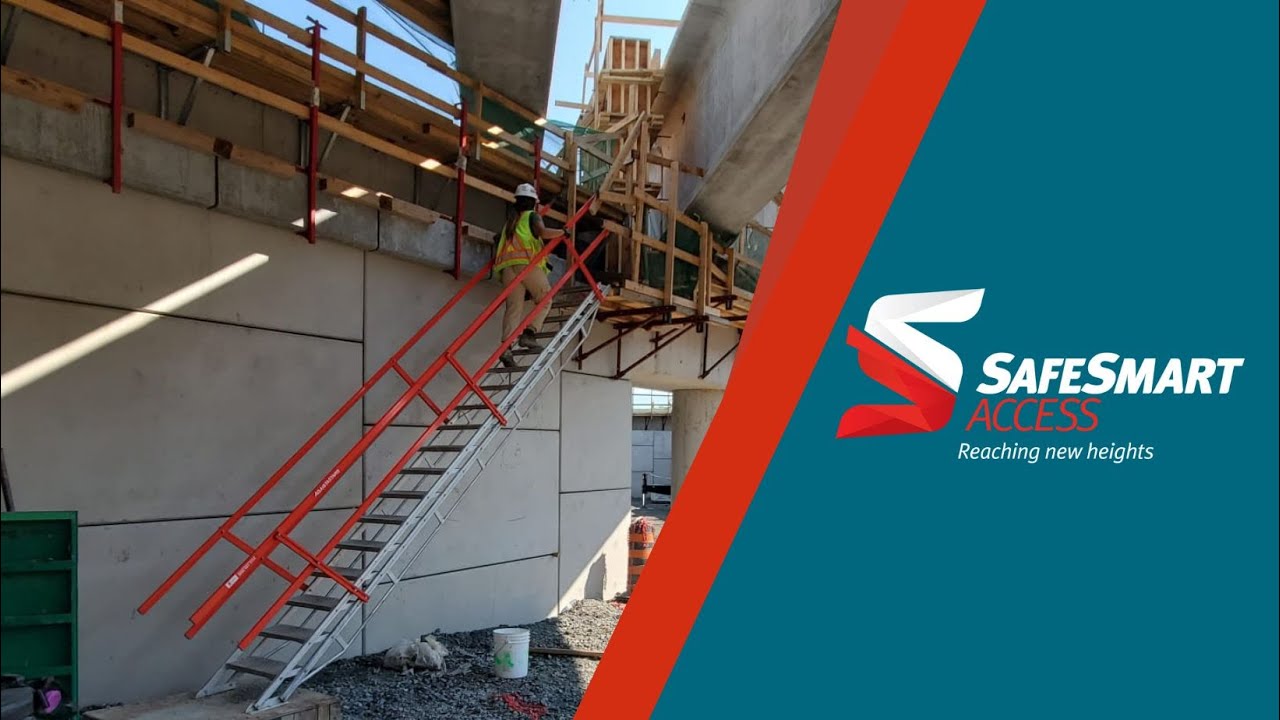
AdjustaStairs are height-adjustable temporary stairs built in marine-grade aluminium, with treads that self-level to the height required across a range up to 4.6m. It fills the same role as temporary stairs on a jump form structure rising in stages, or wherever ground conditions keep moving the access point. Fix it in place once, and it adapts with the site, rather than being pulled apart and rebuilt: A Better Way to keep pace with ground that never stays still.
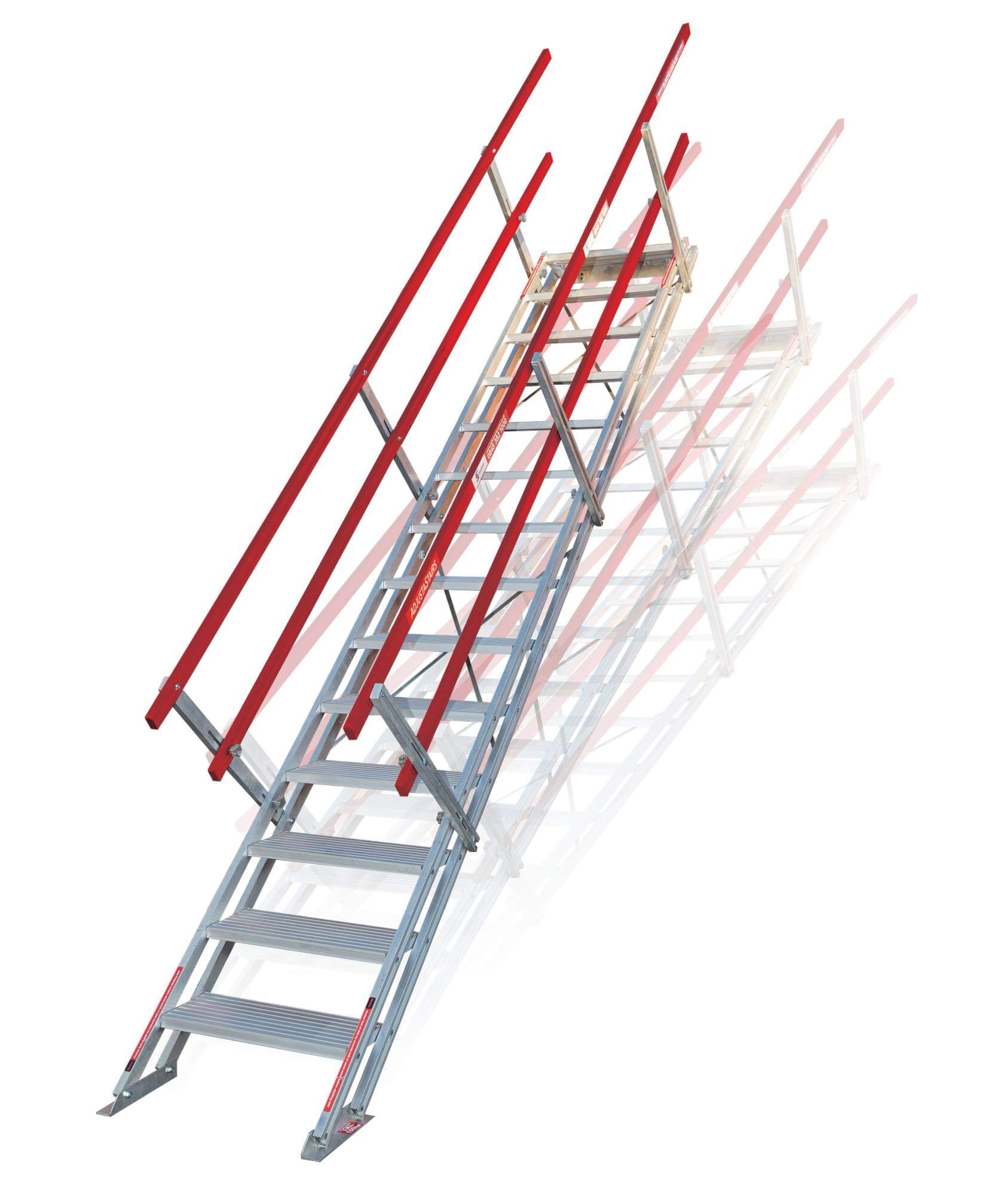
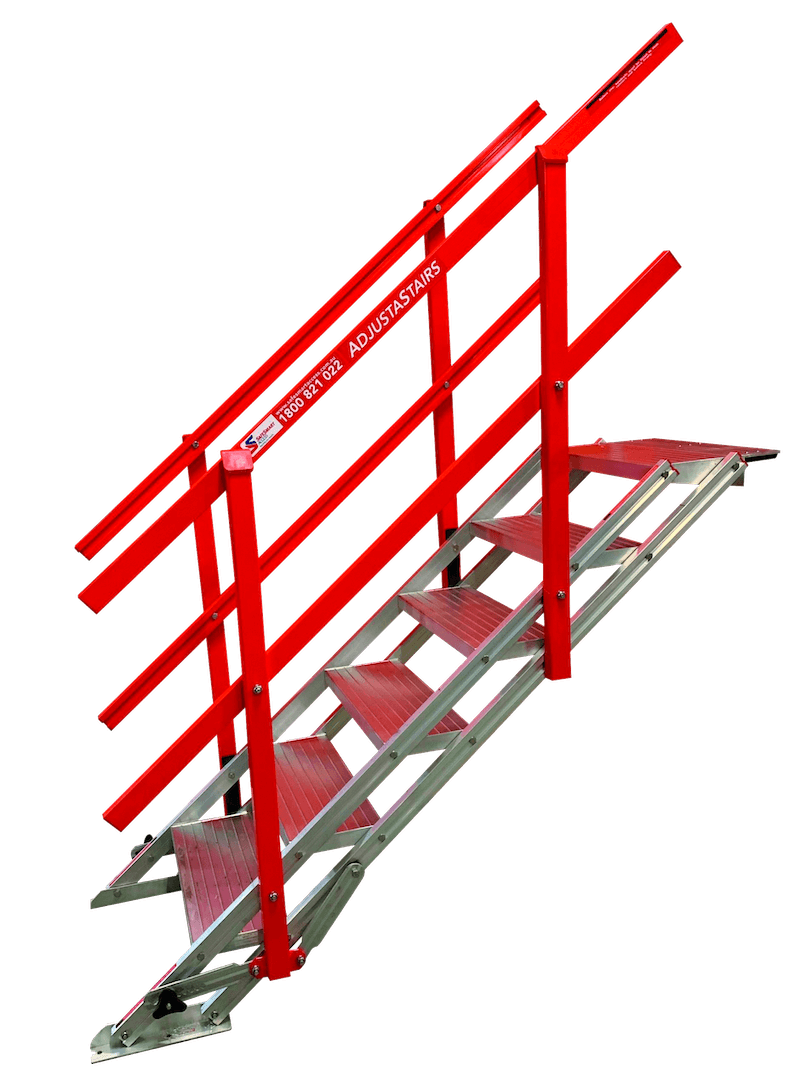
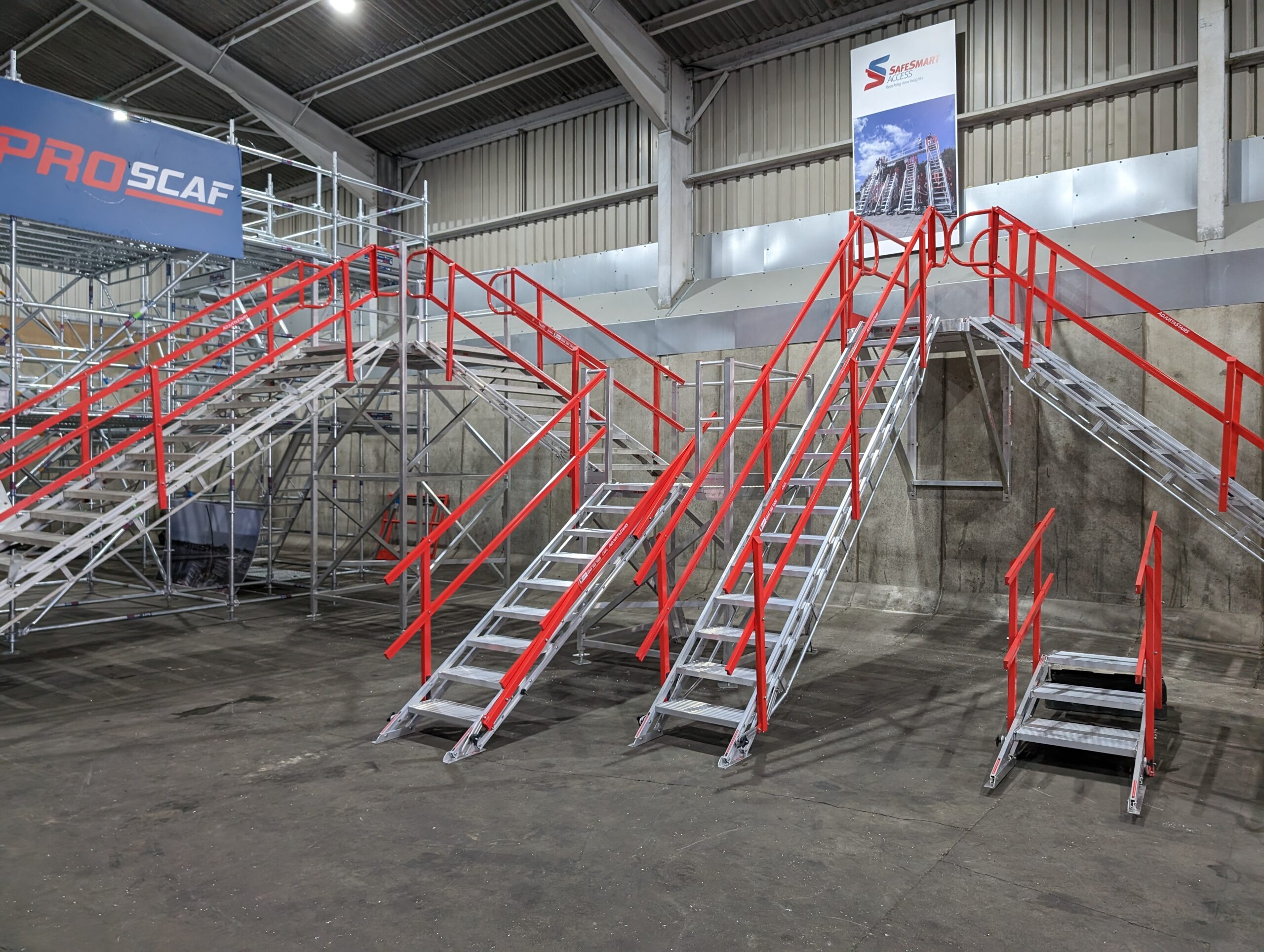
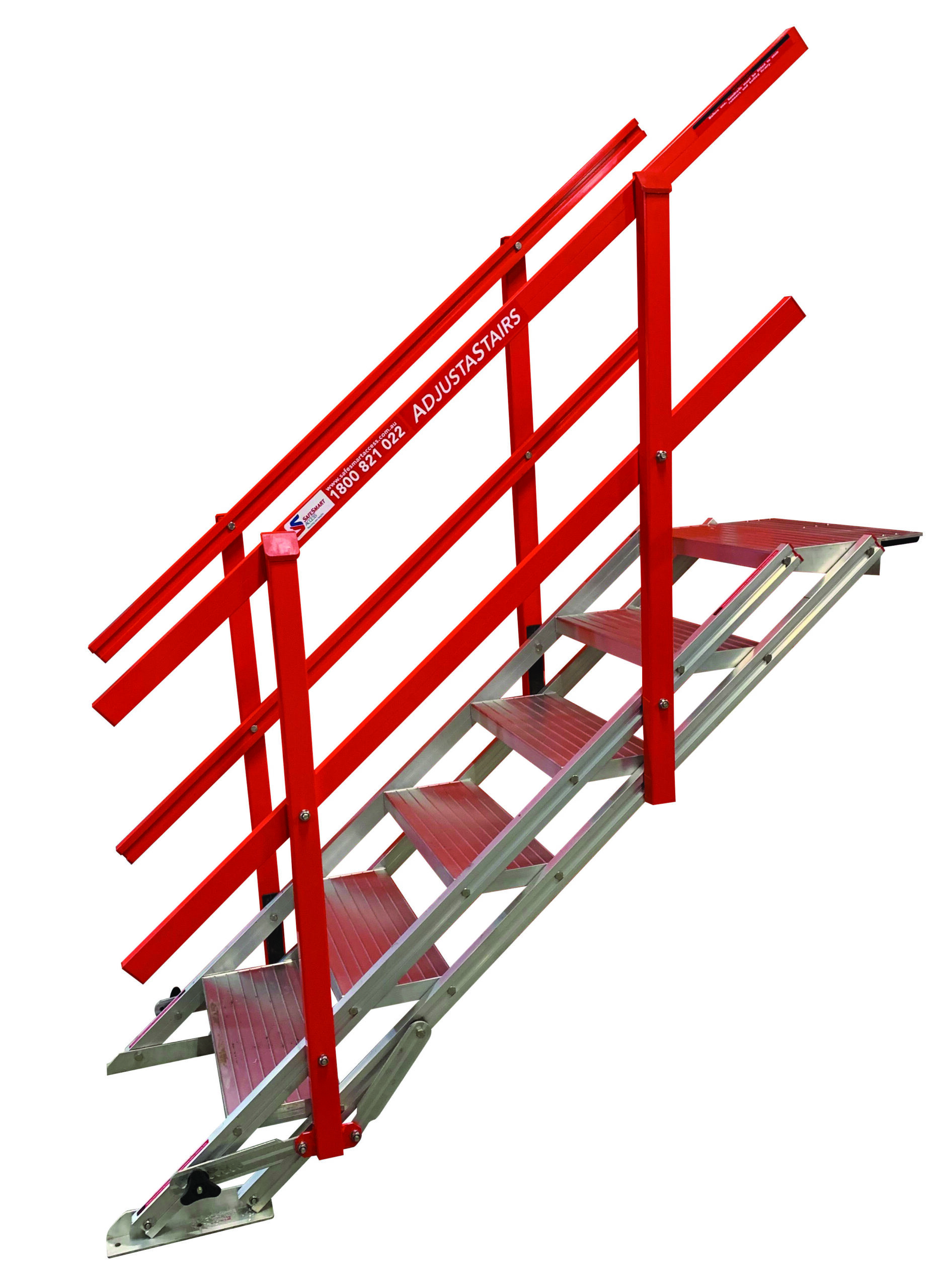
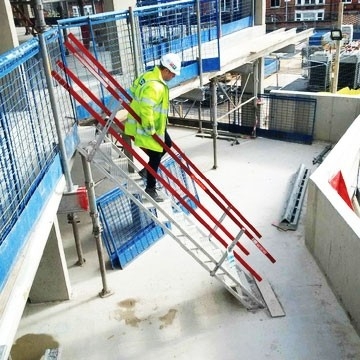
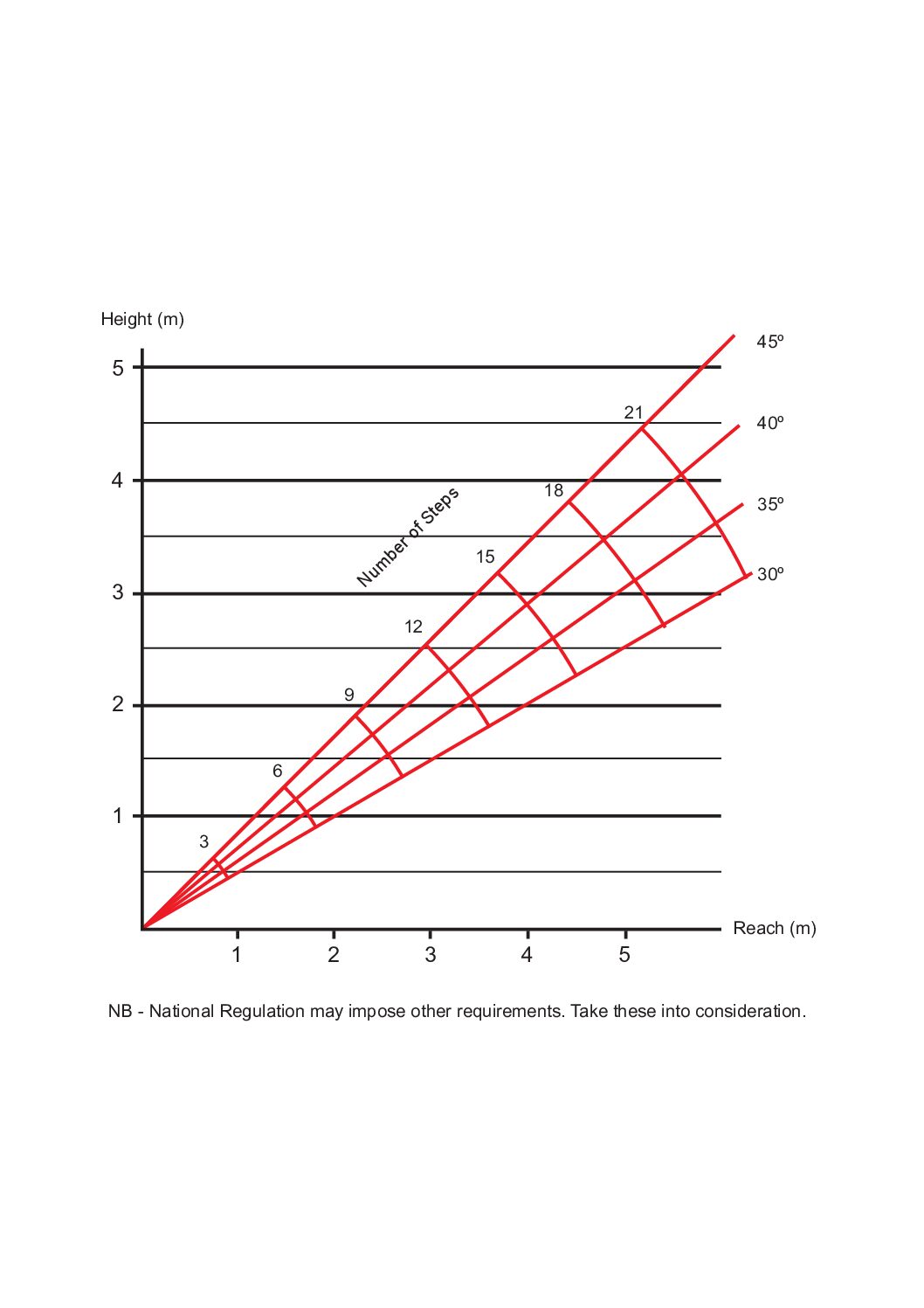
AdjustaStairs treads move independently in sync with the stringers and handrails to ensure that when the handrails are set correctly vertically, the steps will be level regardless of the angle. Place the stairs at the required height, and the treads self-level to provide a flat surface before fixing. A huge height range of options, from 450mm to 4.6m.
Fixing depends on the ground: bolt to a timber sleeper or structural ply base, or pin directly into soil where no hard standing exists. The stairs are self-weighted, so can be set in place in use thanks to the innovative top step that sits on top of hard edge very securely. For further security, anchor at the top or bottom.

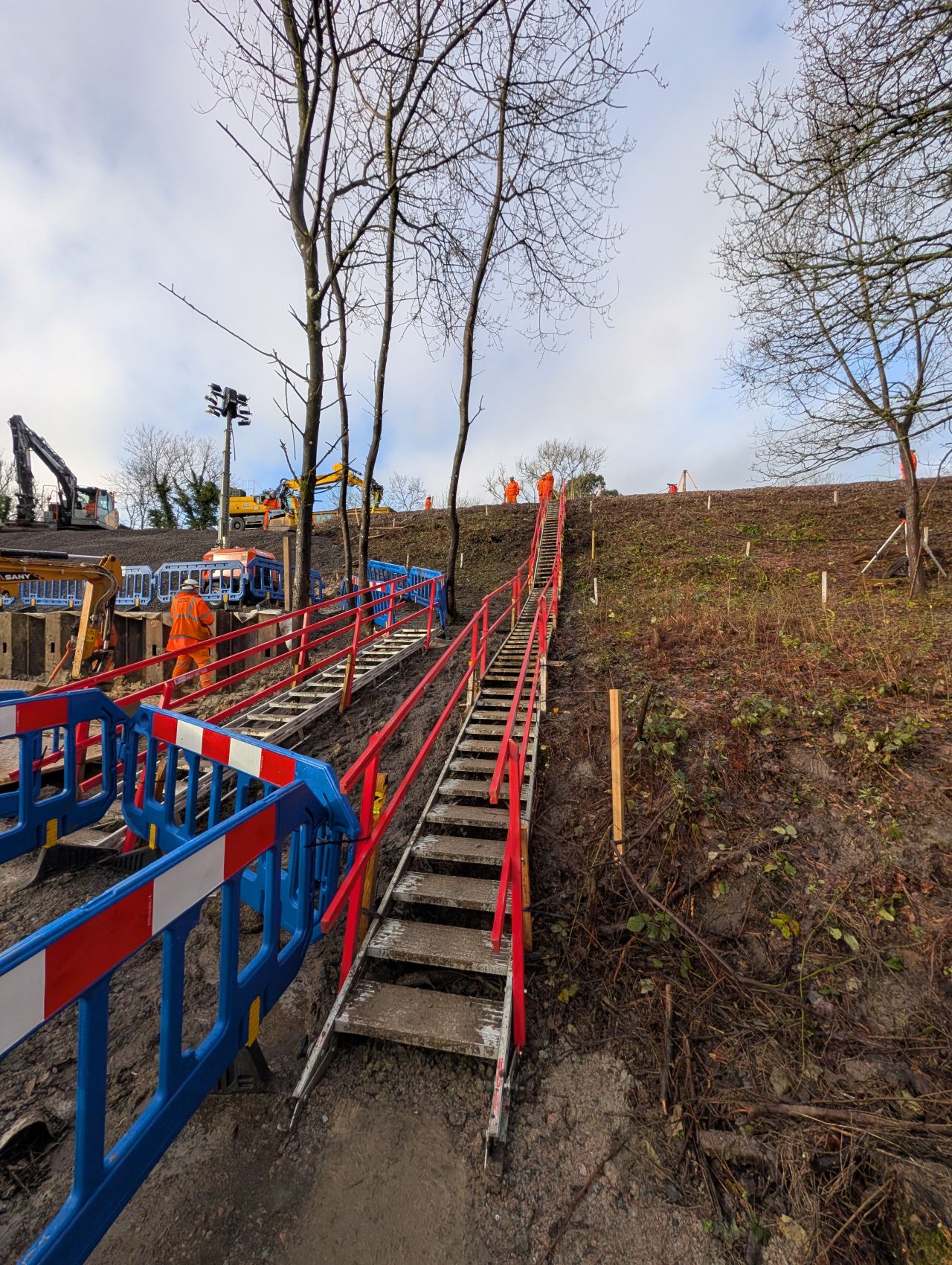
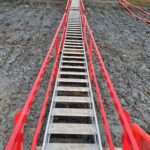
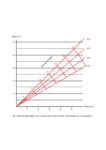
A sloping or uneven embankment is awkward to plot a fixed stair gradient, so AdjustaStairs’ adjustable angle range, 32 to 48 degrees, sets up stable footing without needing to calculate the gradient in advance.
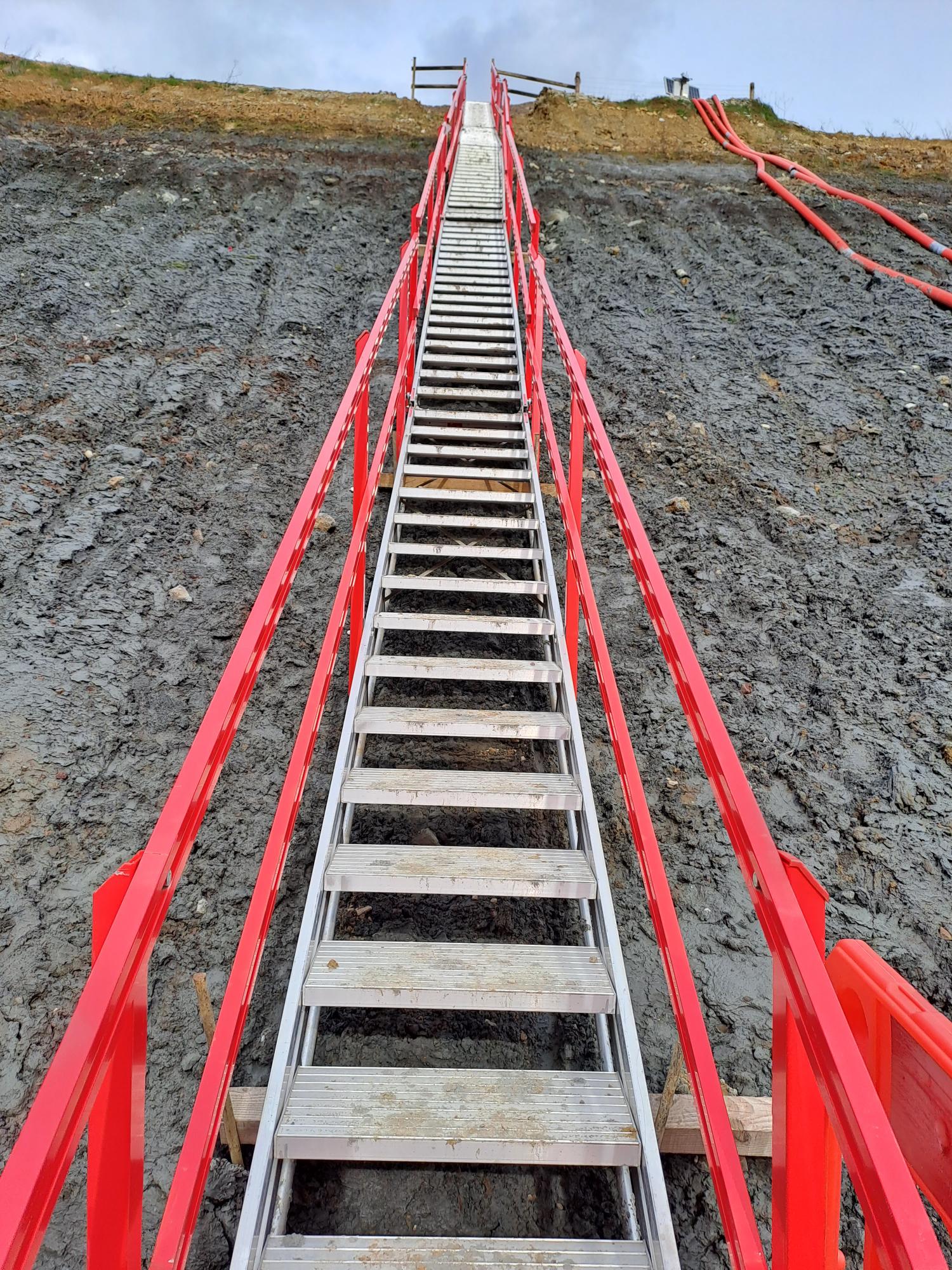
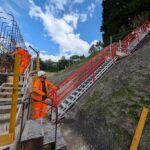
AdjustaStairs treads self-level to the gradient, so each step sits flat whatever angle the batter runs at. This is the batter access use case the range was designed for: units can be joined end to end where a single flight will not cover the full slope, giving one continuous run of batter stairs from crest to toe rather than a series of separate, mismatched sections.
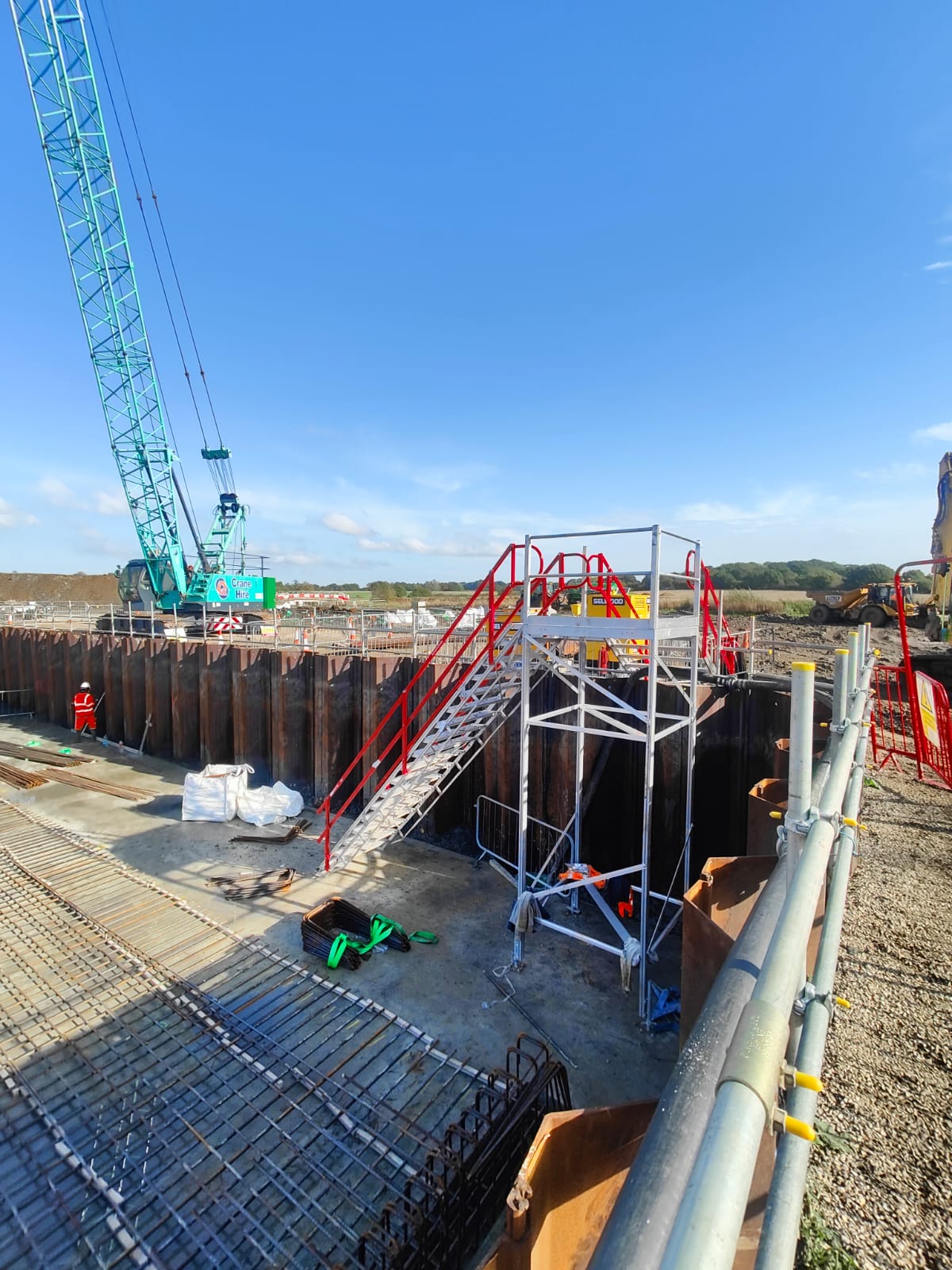
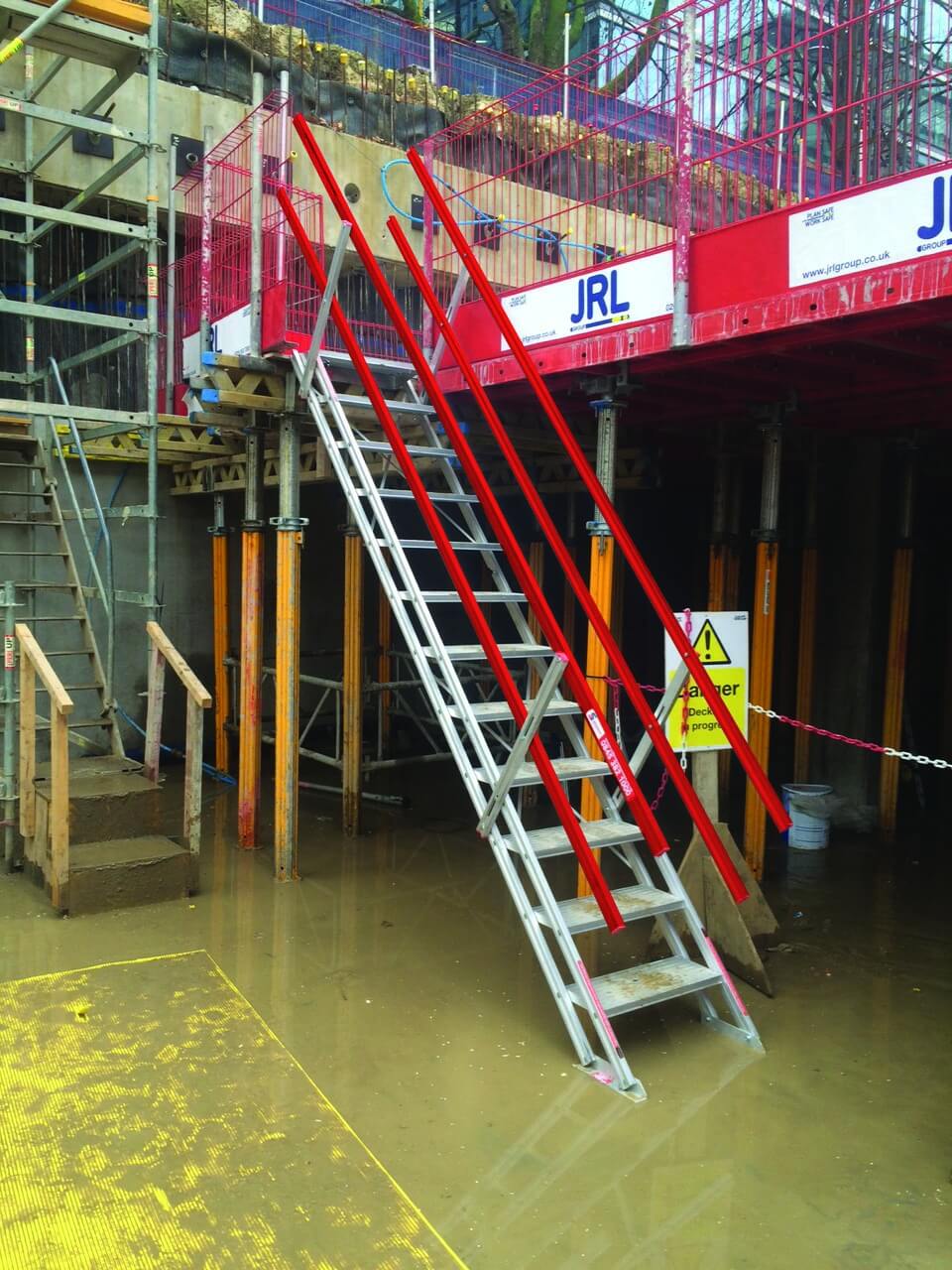
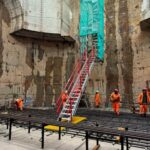
An excavation that deepens as work progresses leaves a fixed-height stair too short within days, forcing a rebuild every time the trench moves. AdjustaStairs adapts without rebuilding: loosen the fixings, reset the treads to the new depth, and fix again, rather than dismantling a timber structure and starting over. The same trench steps can be repositioned as the dig progresses, so the access point moves with the excavation instead of lagging behind it. Fixed with a large support foot at ground level and pinned or bolted at the top, the unit stays stable on the loose or uneven ground typical of an open trench.
Beyond a single slope or trench, access needs shift across your site as work progresses: a floor level rises, a compound is reconfigured, a route changes. AdjustaStairs relocates with it. Rather than building temporary site stairs at one location and rebuilding them at the next as the programme moves on, the same unit unbolts, resets and refixes wherever temporary access stairs are needed next, cutting the labour spent on repeat timber builds.

AdjustaStairs is tested to BS EN 12811-1, rated to 500kg with a 2.5 kPa working load, and requires no additional sign-off or certification once the treads are levelled and the unit is fixed top and bottom. Falls from height accounted for 25% of worker fatalities in Great Britain in 2025/26, 31 of 126 deaths (HSE).
AdjustaStairs removes the ladder from that equation: workers descend and ascend on a level tread rather than rungs, cutting fall risk by 70% and avoiding the ladder accident rate, which runs four times higher in slippery conditions. That makes AdjustaStairs the temporary stair access a site can rely on from groundworks through to handover: on formwork and jump form structures rising in stages, into shipping container stores, and along canal access routes, as well as on open ground.
If your site also needs a fixed platform alongside the stairs, an aluminium scaffold tower or a mobile access platform covers the gap.

Identifying the Challenge
For Mace, downtime was becoming a significant issue, with workers forced to take longer, indirect routes between work zones and productivity lost as a result. The project also needed a reliable emergency route, compliant with stretcher access requirements, so that an incident could be evacuated quickly and safely.
Supplying the Solution: Double Width AdjustaStairs
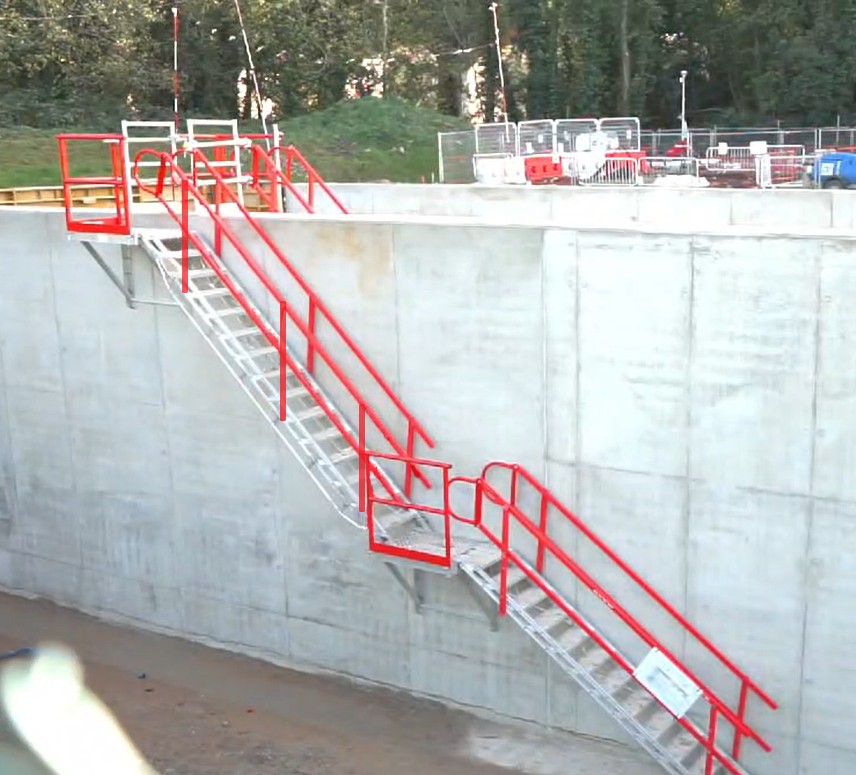
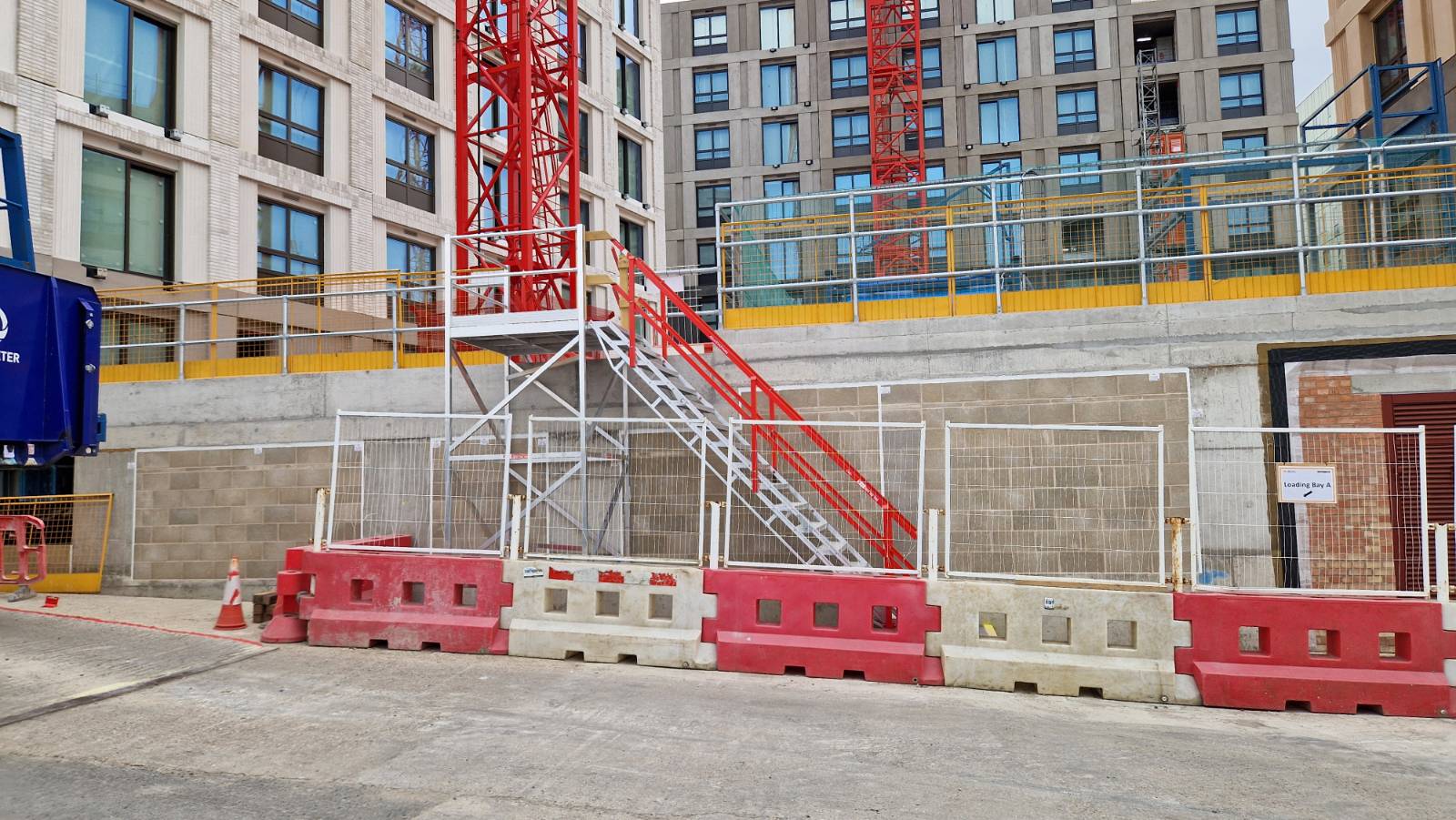
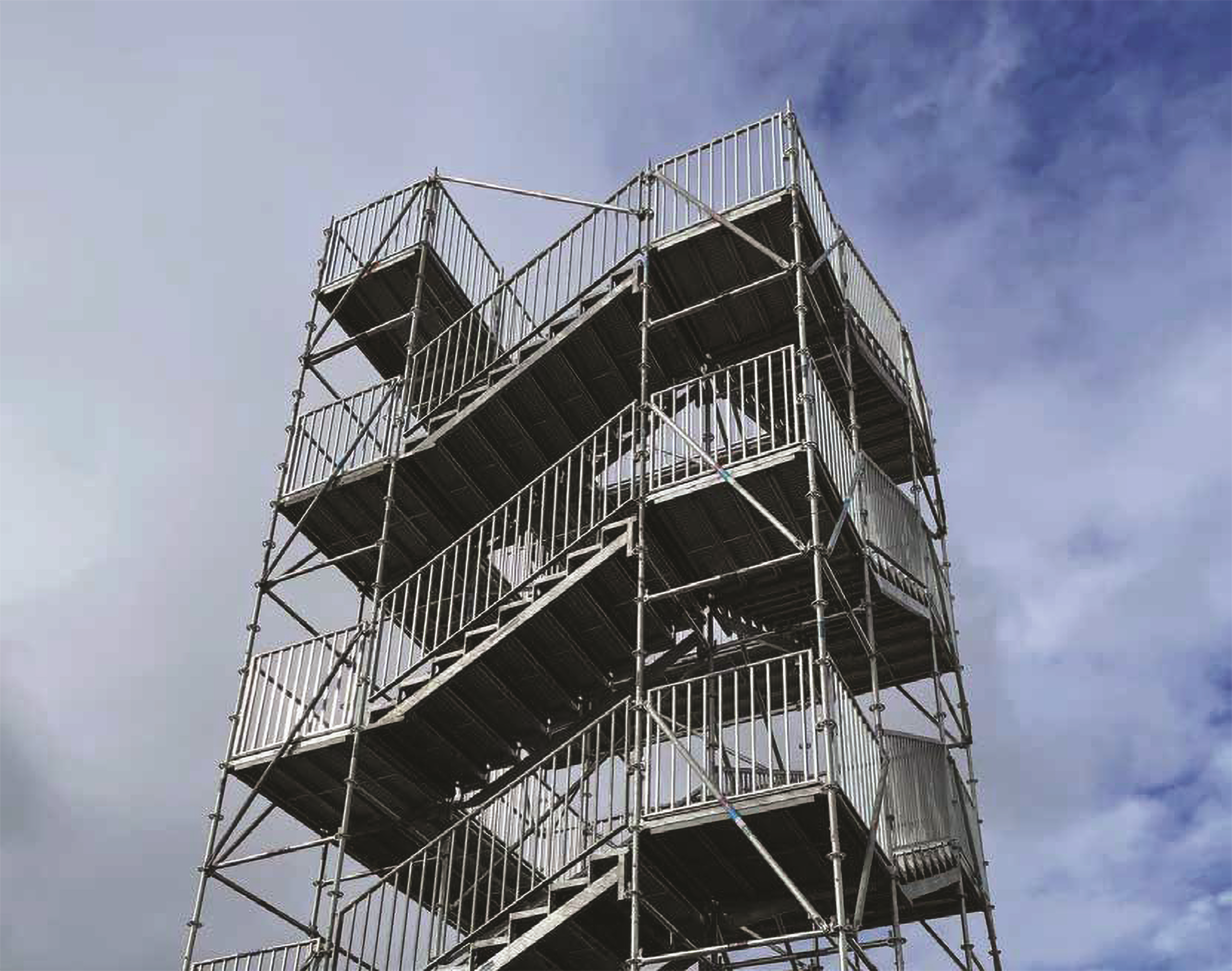
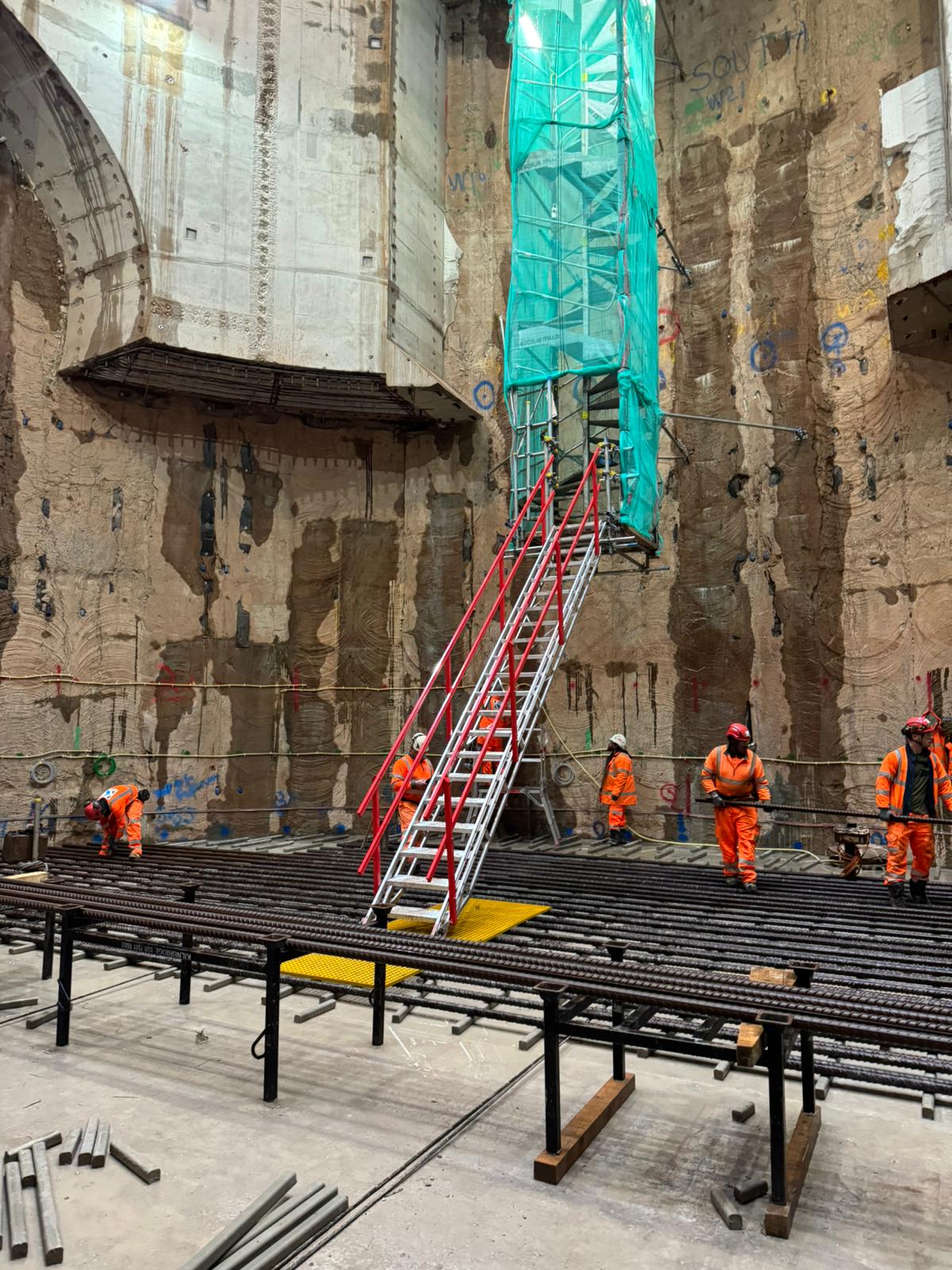
SafeSmart supplied Double Width AdjustaStairs (1200mm wide) with a secure mid-landing, enabling two-way traffic and stretcher access on the same run. Workers travelling in both directions no longer had to wait for the route to clear, and the mid-landing gave stretcher teams the width and the turning point an emergency evacuation needs.
The Result: A Transformation in Safety and Efficiency
The impact was immediate. Mace now has a quick, compliant emergency route capable of accommodating stretcher access, and workers save time every day by taking the more direct route the stairs provide.
At HS2’s Bromford East shaft, SafeSmart’s AdaptaSpan modular bridging system was installed to give safe, rapid access to the tunnel boring machine’s slurry pipes, with three bridges in place and design and installation time saved on Europe’s largest infrastructure project.
Hinkley Point C took delivery of 70 AdjustaStairs units alongside several Super Maintenance Platforms, replacing standard and dangerous ladders with units workers can deploy in minutes.
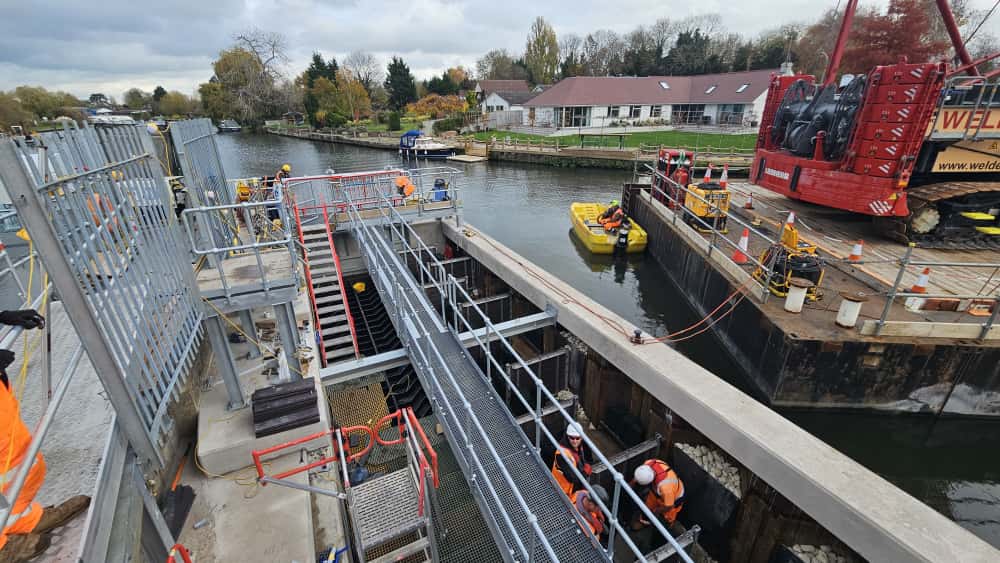
At Dorking Sewage Works, AdjustaStairs was supplied to Thames Water and Galliford Try Infrastructure for safe site access.

On a deepening excavation or a variable-gradient embankment, the level between two points changes as work progresses, and a fixed timber stair has to be rebuilt every time it does. AdjustaStairs removes that problem: apply the stairs and they adjust to the gradient without prior planning or design, with integral handrails for a fully compliant, fast set-up.
AdjustaStairs are height-adjustable temporary stairs built in marine-grade aluminium, with treads that self-level to the height required across a range up to 4.6m. It fills the same role as temporary stairs on a jump form structure rising in stages, or wherever ground conditions keep moving the access point. Fix it in place once, and it adapts with the site, rather than being pulled apart and rebuilt: A Better Way to keep pace with ground that never stays still.
AdjustaStairs treads move independently in sync with the stringers and handrails to ensure that when the handrails are set correctly vertically, the steps will be level regardless of the angle. Place the stairs at the required height, and the treads self-level to provide a flat surface before fixing. A huge height range of options, from 450mm to 4.6m.
Fixing depends on the ground: bolt to a timber sleeper or structural ply base, or pin directly into soil where no hard standing exists. The stairs are self-weighted, so can be set in place in use thanks to the innovative top step that sits on top of hard edge very securely. For further security, anchor at the top or bottom.
A sloping or uneven embankment is awkward to plot a fixed stair gradient, so AdjustaStairs’ adjustable angle range, 32 to 48 degrees, sets up stable footing without needing to calculate the gradient in advance.
AdjustaStairs treads self-level to the gradient, so each step sits flat whatever angle the batter runs at. This is the batter access use case the range was designed for: units can be joined end to end where a single flight will not cover the full slope, giving one continuous run of batter stairs from crest to toe rather than a series of separate, mismatched sections.
An excavation that deepens as work progresses leaves a fixed-height stair too short within days, forcing a rebuild every time the trench moves. AdjustaStairs adapts without rebuilding: loosen the fixings, reset the treads to the new depth, and fix again, rather than dismantling a timber structure and starting over. The same trench steps can be repositioned as the dig progresses, so the access point moves with the excavation instead of lagging behind it. Fixed with a large support foot at ground level and pinned or bolted at the top, the unit stays stable on the loose or uneven ground typical of an open trench.
Beyond a single slope or trench, access needs shift across your site as work progresses: a floor level rises, a compound is reconfigured, a route changes. AdjustaStairs relocates with it. Rather than building temporary site stairs at one location and rebuilding them at the next as the programme moves on, the same unit unbolts, resets and refixes wherever temporary access stairs are needed next, cutting the labour spent on repeat timber builds.
AdjustaStairs is tested to BS EN 12811-1, rated to 500kg with a 2.5 kPa working load, and requires no additional sign-off or certification once the treads are levelled and the unit is fixed top and bottom. Falls from height accounted for 25% of worker fatalities in Great Britain in 2025/26, 31 of 126 deaths (HSE).
AdjustaStairs removes the ladder from that equation: workers descend and ascend on a level tread rather than rungs, cutting fall risk by 70% and avoiding the ladder accident rate, which runs four times higher in slippery conditions. That makes AdjustaStairs the temporary stair access a site can rely on from groundworks through to handover: on formwork and jump form structures rising in stages, into shipping container stores, and along canal access routes, as well as on open ground.
If your site also needs a fixed platform alongside the stairs, an aluminium scaffold tower or a mobile access platform covers the gap.
Identifying the Challenge
For Mace, downtime was becoming a significant issue, with workers forced to take longer, indirect routes between work zones and productivity lost as a result. The project also needed a reliable emergency route, compliant with stretcher access requirements, so that an incident could be evacuated quickly and safely.
Supplying the Solution: Double Width AdjustaStairs
SafeSmart supplied Double Width AdjustaStairs (1200mm wide) with a secure mid-landing, enabling two-way traffic and stretcher access on the same run. Workers travelling in both directions no longer had to wait for the route to clear, and the mid-landing gave stretcher teams the width and the turning point an emergency evacuation needs.
The Result: A Transformation in Safety and Efficiency
The impact was immediate. Mace now has a quick, compliant emergency route capable of accommodating stretcher access, and workers save time every day by taking the more direct route the stairs provide.
At HS2’s Bromford East shaft, SafeSmart’s AdaptaSpan modular bridging system was installed to give safe, rapid access to the tunnel boring machine’s slurry pipes, with three bridges in place and design and installation time saved on Europe’s largest infrastructure project.
Hinkley Point C took delivery of 70 AdjustaStairs units alongside several Super Maintenance Platforms, replacing standard and dangerous ladders with units workers can deploy in minutes.
At Dorking Sewage Works, AdjustaStairs was supplied to Thames Water and Galliford Try Infrastructure for safe site access.