Temporary Stairs vs Ladders: Which Is Better for Safe, Efficient Site Access?
When workers need to move between levels, a ladder is often the first solution that comes to mind.
It’s familiar. It’s readily available. And for certain short-duration tasks, a ladder can be exactly the right tool.
But when access becomes a regular part of the working day, when workers need to carry tools or equipment, when multiple people need to move between levels, or when ground conditions and heights are constantly changing, a ladder may no longer be the best solution.
That’s where temporary stairs come into their own.
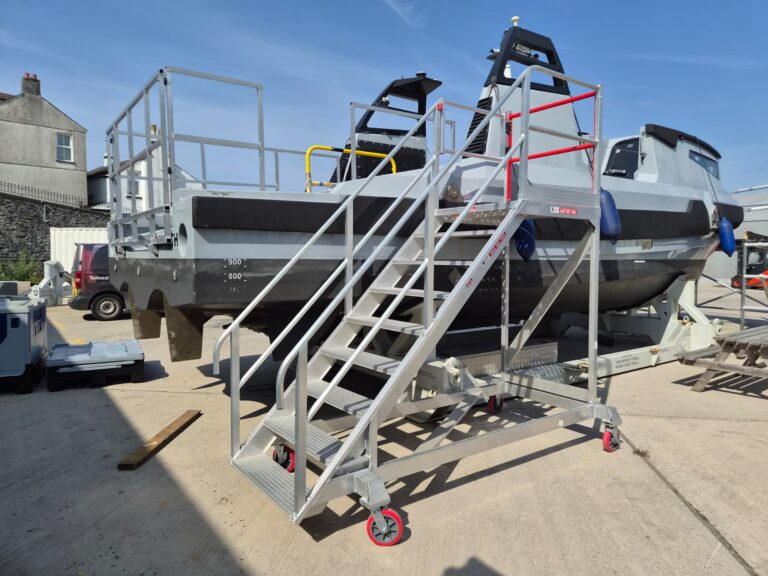
Designed to provide a more natural, stable and efficient way of moving between levels, temporary stairs can transform access on construction sites, civil engineering projects, excavations, embankments, utilities and industrial environments.
And with a system such as SafeSmart’s AdjustaStairs, temporary access doesn’t have to mean complicated scaffolding or permanent construction.
It can mean a lightweight, adjustable staircase that is ready to adapt as your project changes.
Ladder or stairs? It depends on the job.
The question isn’t whether ladders are useful.
The better question is:
Is a ladder the right access solution for the task?
For occasional, short-duration access where workers need to climb to a level and immediately return, a ladder can be practical.
But access requirements change dramatically when the route is used repeatedly throughout the day.
Consider a worker climbing into an excavation several times during a shift.
Or a team moving between different levels of a construction project.
Or workers carrying tools, materials and equipment between a working platform and ground level.
Suddenly, access isn’t simply about getting from A to B.
It becomes a question of safety, ergonomics, productivity and ease of movement.
That is where temporary stairs offer a significant advantage.
Stairs vs Ladders: What’s the Difference?
A ladder is designed for climbing. Stairs are designed for walking.
That simple difference can have a significant impact on how people move around a busy construction, civil engineering or industrial site.
Temporary stairs provide a more natural way to move between levels, with defined treads and handrails providing a stable, familiar route for regular pedestrian access.
For workers making repeated journeys throughout the day, that can mean easier movement, greater confidence and less time spent climbing.
Why Choose Temporary Stairs?
Easier, More Efficient Access
Walking up stairs is generally more natural than climbing a ladder, particularly when access is required repeatedly throughout the day.
Better for Moving Tools & Equipment
Stairs provide a practical route for workers moving between levels with tools and equipment, without relying on the same climbing technique required on a ladder.
Ideal for Changing Levels
Construction and civil engineering sites are constantly evolving. Excavations deepen, embankments change and working levels move.
Adjustable temporary stairs can adapt with them.
More Practical for Frequent Access
If workers are using the same ladder access point dozens of times a day, it’s worth asking whether a proper stair route would be more appropriate.
Temporary stairs can turn a simple access point into a more efficient pedestrian route.
AdjustaStairs: Temporary Access That Adapts
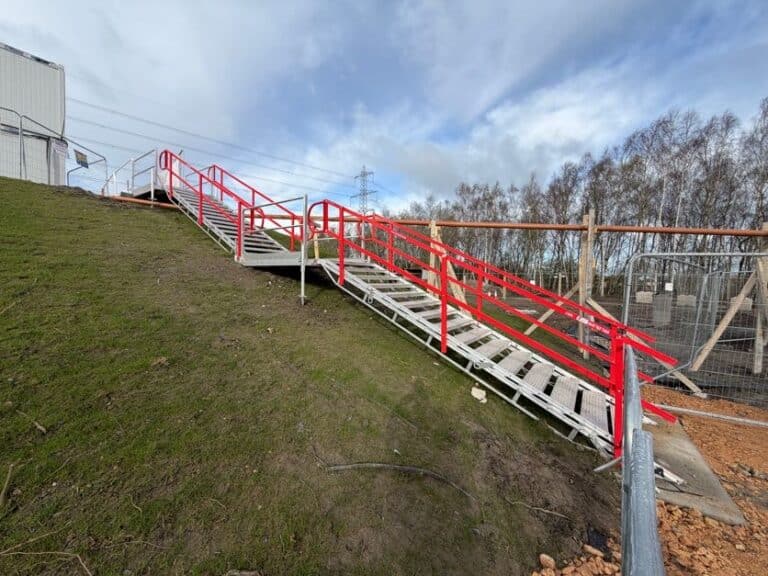
SafeSmart AdjustaStairs are designed to provide temporary stair access where conventional stairs aren’t practical.
The lightweight aluminium system features self-levelling treads and can adjust between 32° and 48°, helping maintain level footing as the stair angle changes.
Multiple units can also be connected to create longer access runs, making AdjustaStairs suitable for applications including:
- Excavations and trenches
- Embankments and batters
- Formwork
- Construction sites
- Civil engineering projects
- Temporary maintenance access
- And much more…
The result is a flexible access solution that can change as your project changes.
So, Stairs or Ladders?
The right solution depends on the task, environment and risk assessment.
But if access is frequent, involves regular pedestrian movement, requires workers to carry equipment, or needs to adapt to changing levels, temporary stairs could be the better choice.
Because sometimes, getting from one level to another shouldn’t feel like a climb.
It should feel like a walk.
Discover A Better Way with AdjustaStairs
Explore SafeSmart AdjustaStairs and find a temporary access solution designed around the way your site actually works.
AdjustaStairs | Temporary Stairs, Adjustable Site Access & Embankment Steps